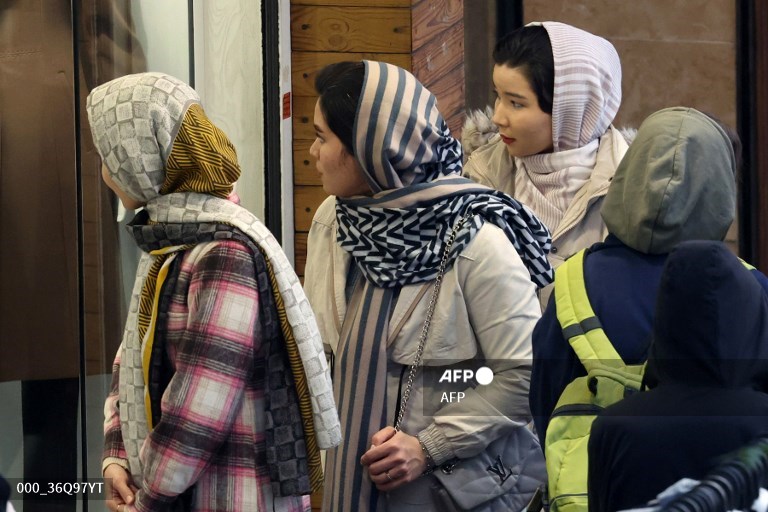
The viral images of bareheaded women sipping lattes in Tehran’s trendy cafes may suggest a burgeoning revolution to the Western eye, but for the women living under the shadow of the Islamic Republic, the reality remains starkly unchanged.
Despite the apparent defiance of the country’s strict mandatory dress code, local activists and residents warn that these visual shifts are merely a “mirage” of progress that masks a persistent lack of fundamental legal rights.
Superficial Shifts
Elnaz, a 32-year-old painter based in the capital, dismissed the international interest in these images as premature. Speaking to AFP on the condition of anonymity, she stressed that the absence of a headscarf in public does not equate to institutional reform.
“Under the surface, no real change has taken place regarding people’s freedom, especially concerning women’s basic rights,” she said, echoing a sentiment shared by many who view the current atmosphere as a temporary lapse in enforcement rather than a shift in policy.
The Legacy of Dissent
The current trend of civil disobedience traces back to the 2022-2023 “Woman, Life, Freedom” protests, sparked by the death of Mahsa Amini in the custody of the morality police. While the dreaded white patrol vans have largely vanished from street corners, the legal machinery of the state remains active.
According to rights groups, the authorities have transitioned from public spectacles of arrest to more bureaucratic forms of repression. Women without hijabs still face barred access, judicial harassment and economic retaliation.
Business Under Fire
For entrepreneurs like Negin, a 34-year-old cafe owner in Tehran, the “freedom” seen in photographs comes at a steep financial and emotional cost.
Baca juga:
“We’ve been treated very harshly… shut down multiple times, fined and forced to pay bribes. It angers me when people call this ‘freedom’ while we are paying the price behind the scenes,” she revealed.
Regional Disparity
The report further highlights a significant divide between the capital and more conservative provinces. In cities like Mashhad and Isfahan, enforcement remains rigid. Residents in Isfahan report that cafes continue to be sealed by authorities, and religious vigilantes often fill the void left by the absent morality police.
A ‘Cynical’ Ploy
Critics have also pointed to a strategic shift in state media. In what is described as a “cynical ploy,” state television has begun broadcasting images of unveiled women—but only those who vocally denounce Iran’s external enemies and pledge loyalty to the leadership.
As Iran navigates a fragile ceasefire following recent conflicts with Israel and the U.S., many women fear that the current “distraction” of the state will eventually end. Zahra, a 57-year-old housewife from Isfahan, noted that the cost of this visibility was paid in blood during past crackdowns.
“Right now, the authorities are distracted by the war,” she cautioned. “But once that settles, who knows what they will do to us next?” – AFP