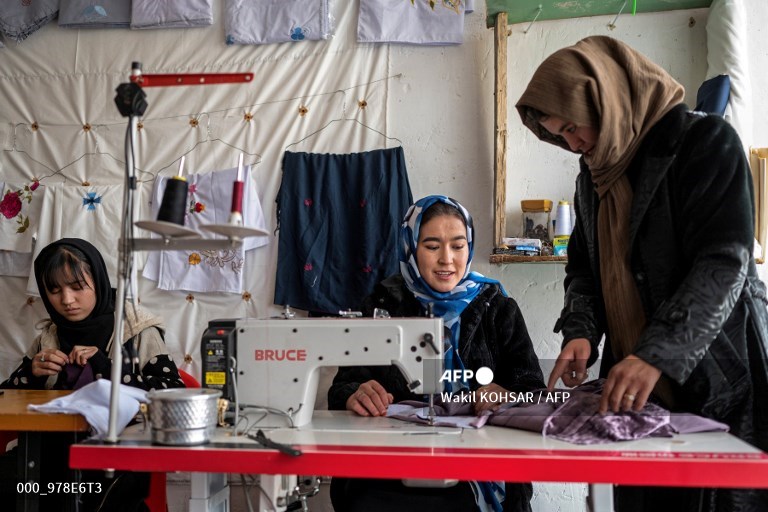
Several Afghan women say they feel trapped like a bird with its wings torn off, yet they continue to find small ways to stay resilient under the strict rules imposed by the Taliban.
Five women from different parts of Afghanistan shared with AFP how they try to cope with lives tightly controlled by the Taliban government through activities such as singing, teaching secretly, writing diaries or even going into the mountains to scream out their pain.
Since the Taliban returned to power in 2021, women have been banned from studying beyond the age of 12 and from entering many public spaces including parks, gyms, pools and beauty salons.
They are also required to fully cover themselves in public, leaving only their hands and eyes visible, with those who violate the rules risking imprisonment.
Taliban Supreme Leader Hibatullah Akhundzada has defended the policies, claiming women have been ‘rescued from oppression.’
However, the United Nations has described the situation as ‘gender apartheid.’
Many Afghan women say the sense of isolation has worsened as Western countries tighten immigration policies, while neighbouring countries such as Iran and Pakistan expelled around 2.5 million Afghans last year.
One of the women, Sanam, 25, had dreamed of becoming a doctor before universities were closed to women in 2022.
Feeling angry and stripped of her rights, she now secretly teaches around 30 girls online despite the risks. She also writes her thoughts in a hidden blue notebook, which she keeps in her closet.
Another woman, Sayamoy, a 34-year-old widow, lost her husband who is a military officer in fighting with Taliban forces before they took power.
Now living with her children, she works as a cleaner while teaching young students from home.
When overwhelmed, she visits her husband’s grave in the mountains where she screams to release her sorrow.
Hura, 24, once studied public relations and journalism and hoped to become a diplomat. With universities closed to women, she now posts photos and videos of herself online dressed freely and singing acts that are risky in a country where music is effectively banned.
Despite the fear, she still hopes to continue her studies through online courses.
For Shogofa, 22, music offers comfort. Living with her large family and suffering from arthritis, she listens to songs by Afghan artists Aryana Sayeed and Farhad Darya, both of whom have left the country.
Meanwhile, Mohjeza, 30, a former NGO worker, lost her job after US aid cuts linked to policies by Donald Trump. Living in a remote mountainous region, she now volunteers to teach girls in her community, exercises daily and reads stories about women who overcame hardship for motivation.
Although opportunities remain limited, these women say small acts from teaching and writing to music and reading help them hold onto hope while living under restrictions they describe as a “cage.” – AFP